01 / SMALL-BOAT FISHING IN ARUBA
02 / LIONFISH BELOW THE REEF
C / CULLING
Deep-water innovation.
Sustainable fisheries.
Overcoming traditional diving limits to protect Aruba’s deepest reefs—and open a new opportunity for local fishers.
C / THE SMALL-BOAT TECH REVOLUTION
Built for deep water.
Designed for local boats.
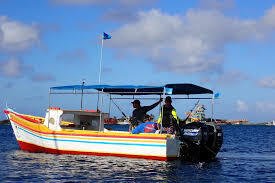
Aruba’s artisanal fleet is the backbone of our coastal economy. Lightweight, easy-to-haul traps can help every local fisher play a part—without requiring a deep scuba dive.
BEYOND THE LIMITS
40 meters is not
the end of the problem.
Traditional scuba-based culling generally works in the 0–40 meter range. Lionfish occur as deep as 300 meters. Our engineering ambition is safe, small-boat harvest across that gap.
Surface
0 m
Scuba culling
40 m
Deep-water trap ambition
300 m
SMART TRAP / CONCEPT EXHIBIT 01
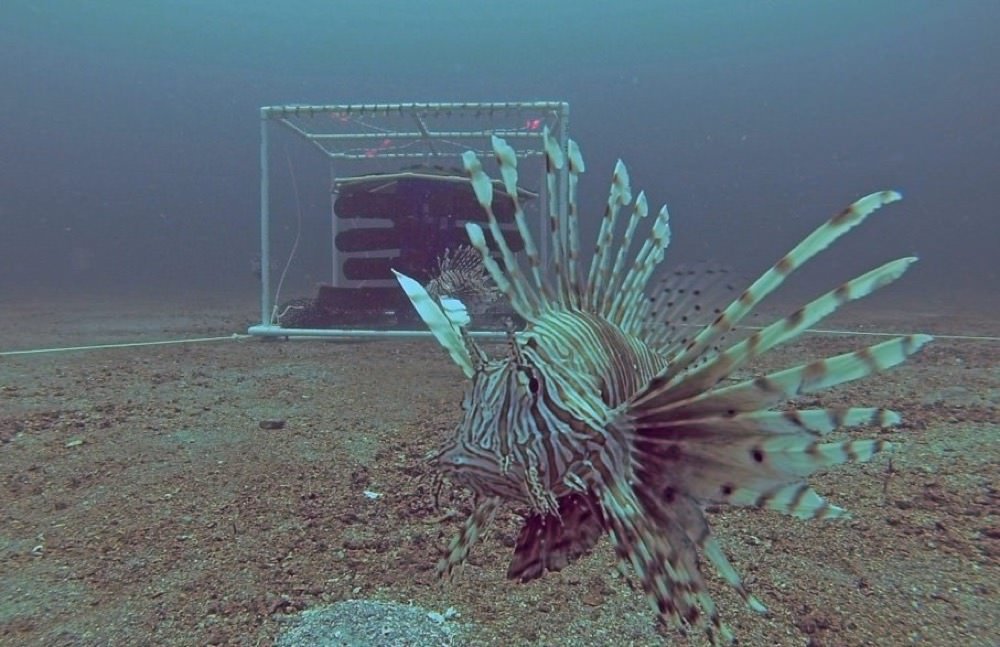
A species-targeted entry concept aims to attract lionfish while limiting native bycatch. Selectivity must be validated in ocean trials.
Conceptual schematic. Engineering specifications are not yet finalized.
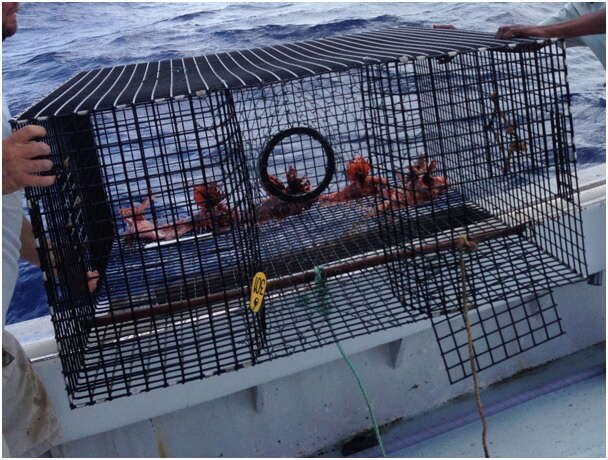
FIELD REFERENCE / TRAP FRAME ON DECK
A cage-style trap photographed aboard a working vessel.
TESTING & DEPLOYMENT
Evidence before expansion.
Proposed pilot milestones—not a live trial feed. Confirmed field updates will replace this planning timeline.
PHASE 01 · PLANNED
Design & compliance
Validate gear design, captain eligibility, licensing, and marine park permissions.
PHASE 02 · PLANNED
Controlled ocean trials
Monitor depth, catch composition, safe retrieval, and native bycatch across coastal zones.
PHASE 03 · PLANNED
Review & refine
Use the evidence to improve trap performance before considering a larger fleet.
THE SUSTAINABLE FISHERY BLUEPRINT
Good for the reef.
Good for the people.
For the reef
Repeatable removal of invasive predators can reduce pressure on native juvenile fish. Every catch and bycatch event contributes to our monitoring.
For the economy
A dependable, safely processed supply can connect Aruban fishers to restaurants and local markets—creating an income stream tied to conservation.
Follow the economic cycle →04 / OUR OPERATING WATERS
A new depth
of possibility.
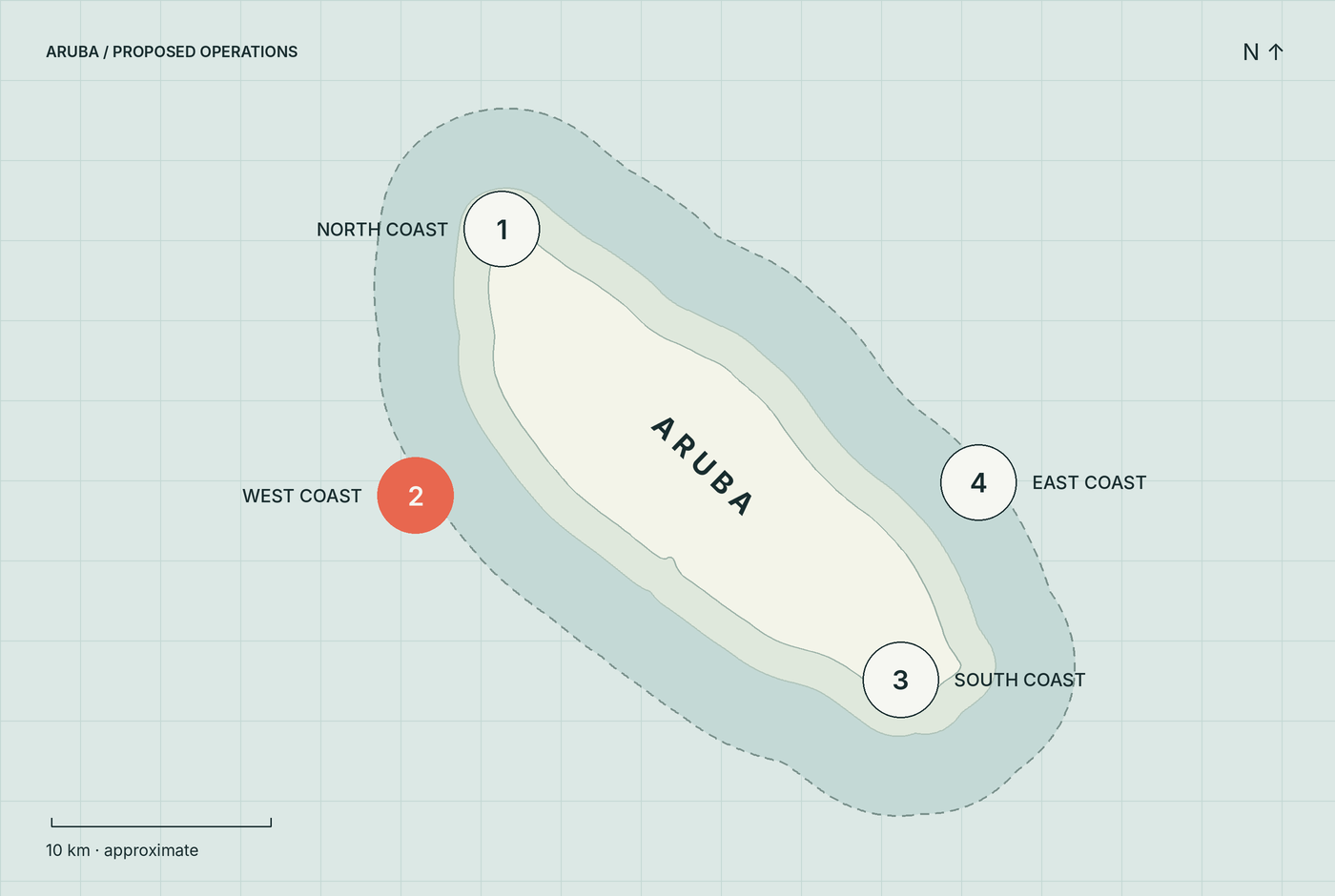
Where shallow-water culling ends, deep-water innovation begins. Explore our proposed testing zones around Aruba.
FISHERY OPERATIONS
Oranjestad / hotel shelves
40–120 m
Calmer shelves. Proposed shallow-to-deep comparison zone.
Shallow culling · 0–40 m
Depth testing zones · 40–300 m
Illustrative map—not navigation or live deployment data. Zone boundaries and depths are conceptual. Map illustration © 2026 C.O.R.E.
LOCAL CAPTAINS. SHARED PURPOSE.
Your boat can
make a difference.
Join the C.O.R.E. Commercial Fishery Network. Help us test and perfect deep-water lionfish traps designed for Aruban vessels.
The proposed Year 1 pilot has five captain positions. Registration expresses interest; selection, permissions, safety checks, and deployment dates are confirmed separately.
YOUR NEXT STEP
Join the pilot fleet.
Tell us about your vessel and the waters you know.
Private submission · No payment details collected