E / EDUCATION
Knowledge is our
greatest tool.
Equipping Aruba’s fishers and seafood processors with the skills to build a safer, more sustainable fishery.
E / ISLAND COMPLIANCE & PILOT FLEET FRAMEWORK
Clear rules.
Careful beginnings.
Transparency and adherence to Aruban law are central to our proposed pilot. The goal is to perfect small-boat deployable technology before expanding.
The six-trap rule.
Our four-trap approach.
The project brief states a maximum of six traps per licensed fisherman. C.O.R.E.’s proposed pilot uses four—leaving room to learn without rushing scale.
Regulatory statement supplied by the project. Current law, licensing, marine park rules, and deployment permissions must be verified with the relevant Aruban authorities before operations begin.
PER CAPTAIN / PROPOSED PILOT
▱
01
▱
02
▱
03
▱
04
▱
05
▱
06
4 planned traps
2 not used in the pilot
5
Selected captains
Vetted local commercial fishers representing different coastal zones.
4
Traps per vessel
A controlled total of 20 smart traps island-wide for monitoring and refinement.
1
Core objective
Perfect small-boat technology before considering the Year 2 fleet model.
TARGETED TRAINING PATHS
Practical skills.
Safer fisheries.
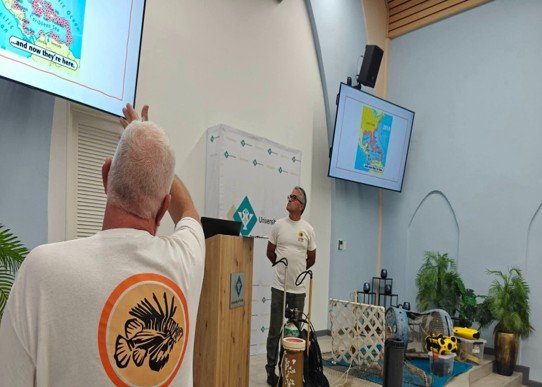
Knowledge keeps people safe and conservation effective. Workshops are proposed; dates and certified instructors will be confirmed.
FOR COMMERCIAL FISHERS
Deploy. Track. Retrieve.
Free technical workshops covering deployment mechanics, GPS trap tracking, deck safety, and optimized deep-water retrieval for small boats.
• Trap mechanics and vessel suitability
• GPS logging and zone assignments
• Catch records and bycatch reporting
FOR SEAFOOD PROCESSORS
Handle with knowledge.
Instructor-led training on safe spine removal, clean workstations, and high-yield filleting. Lionfish have venomous spines: handling requires qualified instruction.
View the proposed learning sequence +
1. Instructor-led safety briefing and protective equipment.
2. Supervised handling and spine-removal demonstration.
3. Filleting, hygiene, cold-chain, and quality checks.
An overview, not a handling guide. Video lessons will be added after expert review. Do not attempt unsupervised handling.
LEARN WITH THE NETWORK
Join the next
technical workshop.
Tell us your training path and preferred port. We’ll follow up when a suitable workshop is scheduled.
No dates have been announced. Registration does not reserve a confirmed place. Proposed workshops are free.
YOUR NEXT STEP
Put knowledge to work.
Register your workshop interest.
Private submission · No payment details collected